> For the complete documentation index, see [llms.txt](https://docs.akinon.com/llms.txt). Markdown versions of documentation pages are available by appending `.md` to page URLs; this page is available as [Markdown](https://docs.akinon.com/technical-guides/project-zero/django/project-structure/omnife-project-submodule.md).
# Omnife Project Submodule
Project Zero uses Django as the web framework. Some of the Python codes and Django-related codes required for the system to work are located in the **omnife\_project** submodule and some are in the **omnife\_base** directory. This submodule is necessary for the project to work correctly.
## omnife\_project
Most of the settings, view and url files required for the project are located under the omnife\_project/omnife directory. These files are grouped according to the features as follows.
### Views
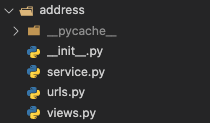
A Django project works with views, and in Project Zero, these views are defined in views.py files under the **omnife\_project/omnife directory**. For example, views created for addresses are in the omnife\_project/omnife/address/views.py file.
### Urls
In Django projects, urls are located in the urls.py file. In Project Zero, similar to views, all urls are located in the urls.py file in the respective directory. As an example, urls for addresses are defined in the omnife\_project/omnife/address/urls.py file.
### Services
Project Zero communicates with the backend through services. Each service file is located in its own directory, similar to views and urls. For example, the service file for addresses is the omnife\_project/omnife/address/service.py file. Each of these services is extended from the Service class in the omnife\_project/omnife/core/service.py file and uses the methods of this base class.
### Settings
Since Project Zero was created with the Django infrastructure, all project settings are defined in the settings.py file. Most of the settings are in the **omnife\_project/omnife/settings.py** file.
---
# Agent Instructions
This documentation is published with GitBook. GitBook is the documentation platform designed so that both humans and AI agents can read, navigate, and reason over technical content effectively. Learn more at gitbook.com.
## Querying This Documentation
If you need additional information that is not directly available in this page, you can query the documentation dynamically by asking a question.
Perform an HTTP GET request on the current page URL with the `ask` query parameter, and the optional `goal` query parameter:
```
GET https://docs.akinon.com/technical-guides/project-zero/django/project-structure/omnife-project-submodule.md?ask=&goal=
```
`ask` is the immediate question: it should be specific, self-contained, and written in natural language.
`goal` is optional and describes the broader end goal you are ultimately trying to accomplish on behalf of the user. GitBook uses it to tailor the answer towards what is most useful for that goal.
The response will contain a direct answer to the question and relevant excerpts and sources from the documentation.
Use this mechanism when the answer is not explicitly present in the current page, you need clarification or additional context, or you want to retrieve related documentation sections.