> For the complete documentation index, see [llms.txt](https://docs.akinon.com/llms.txt). Markdown versions of documentation pages are available by appending `.md` to page URLs; this page is available as [Markdown](https://docs.akinon.com/tutorials/oms/state-transitions.md).
# State Transitions
This tutorial explains how to add or edit a state transition within the OMS screens. State transitions play a crucial role in managing package and transfer operations efficiently.
## Step 1: Access State Transitions
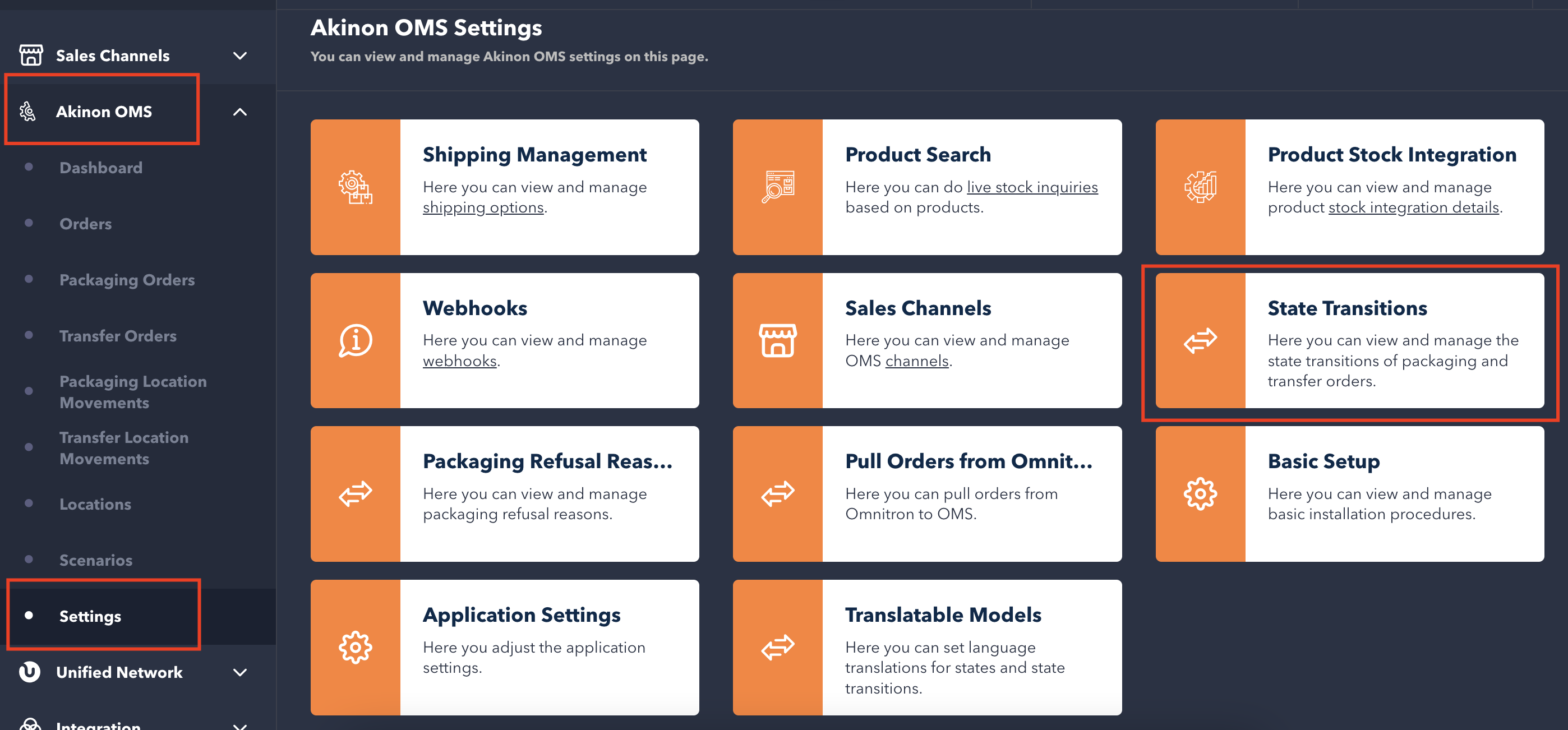
* To add a new state transition, start by selecting the **Settings** tab under the Akinon OMS menu.
* Next, click on **State Transitions**.
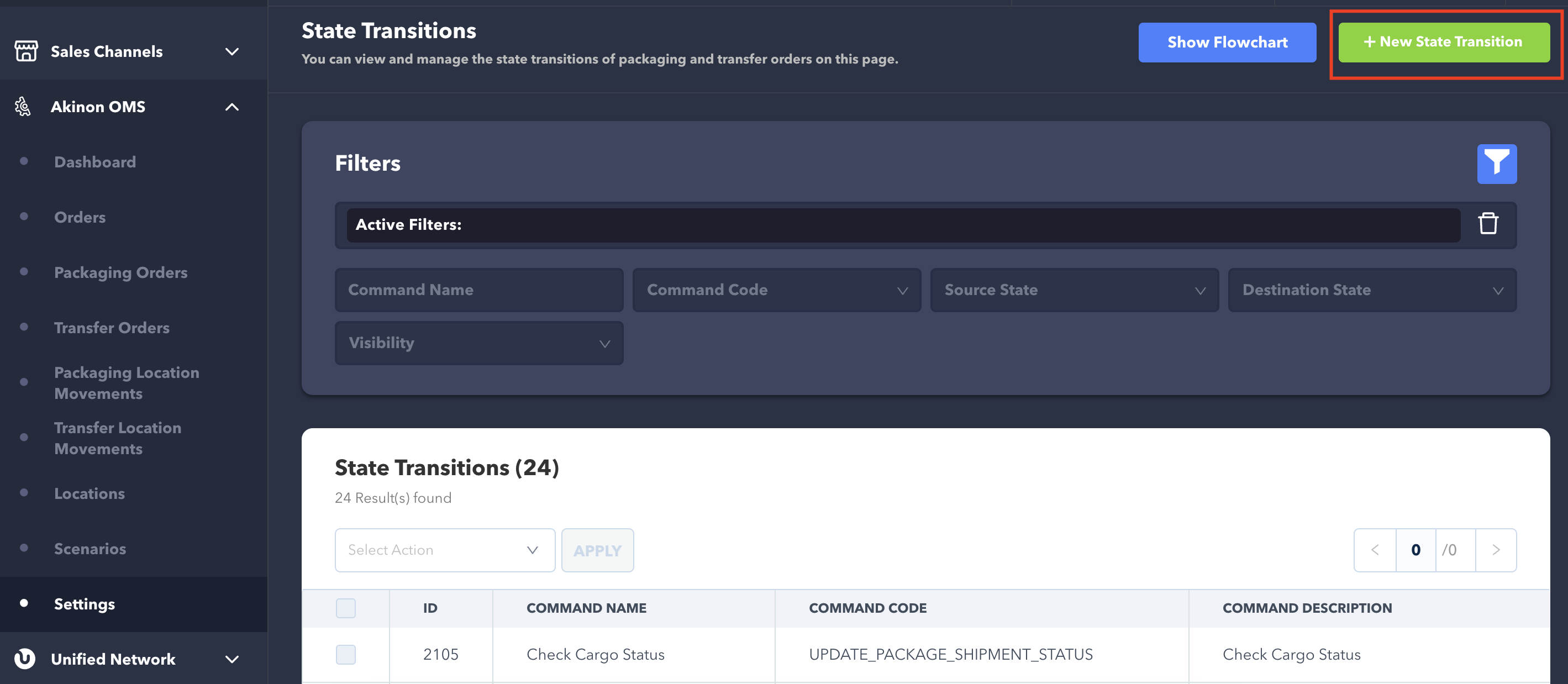
* Click on the **+New State Transition** button to add new state transition.
* You can visualize the state transition flowchart by clicking the **Show Flowchart** button.
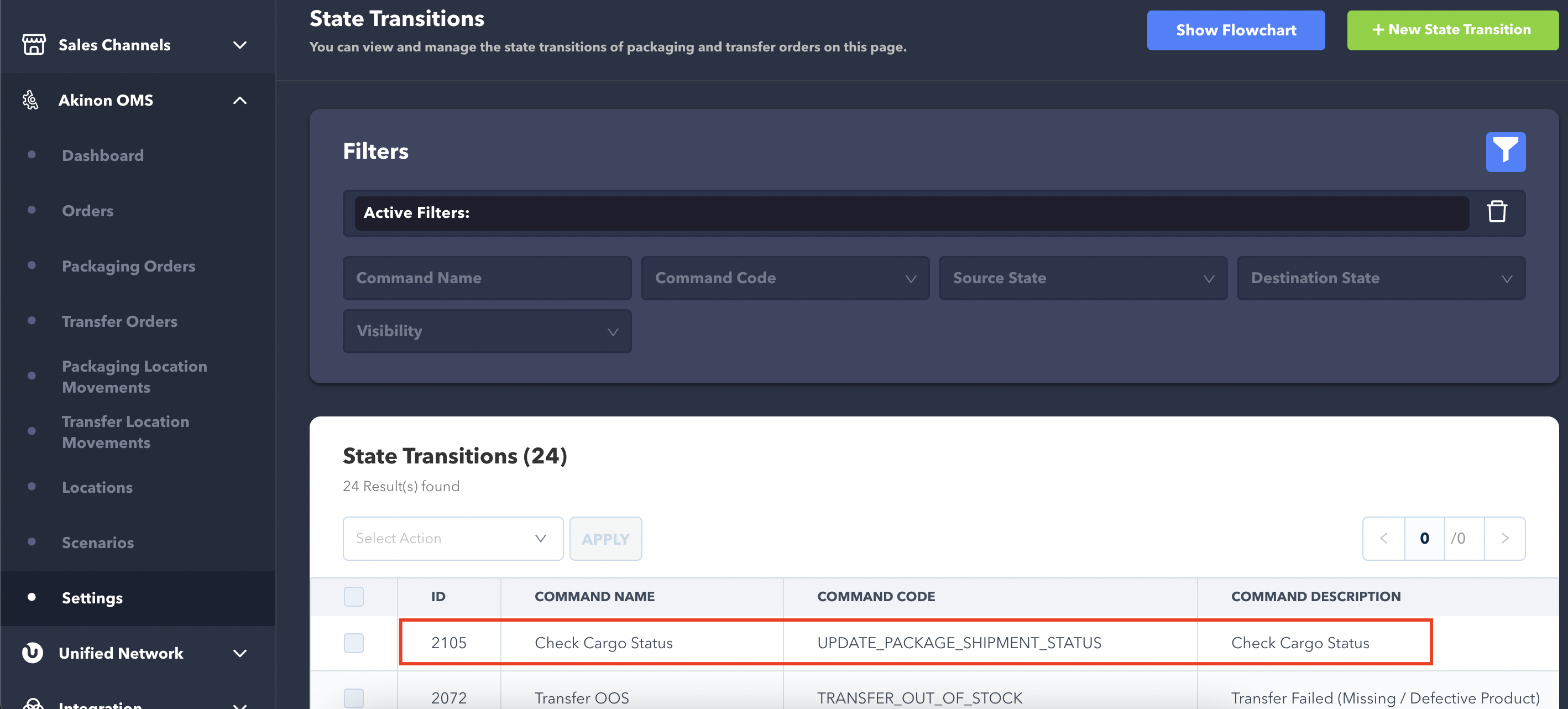
* To edit an existing state transition, follow the same steps to access **State Transitions** under the **Settings** tab. Select the state transition you want to edit from the list and proceed to its details.
## Step 2: Define State Transition
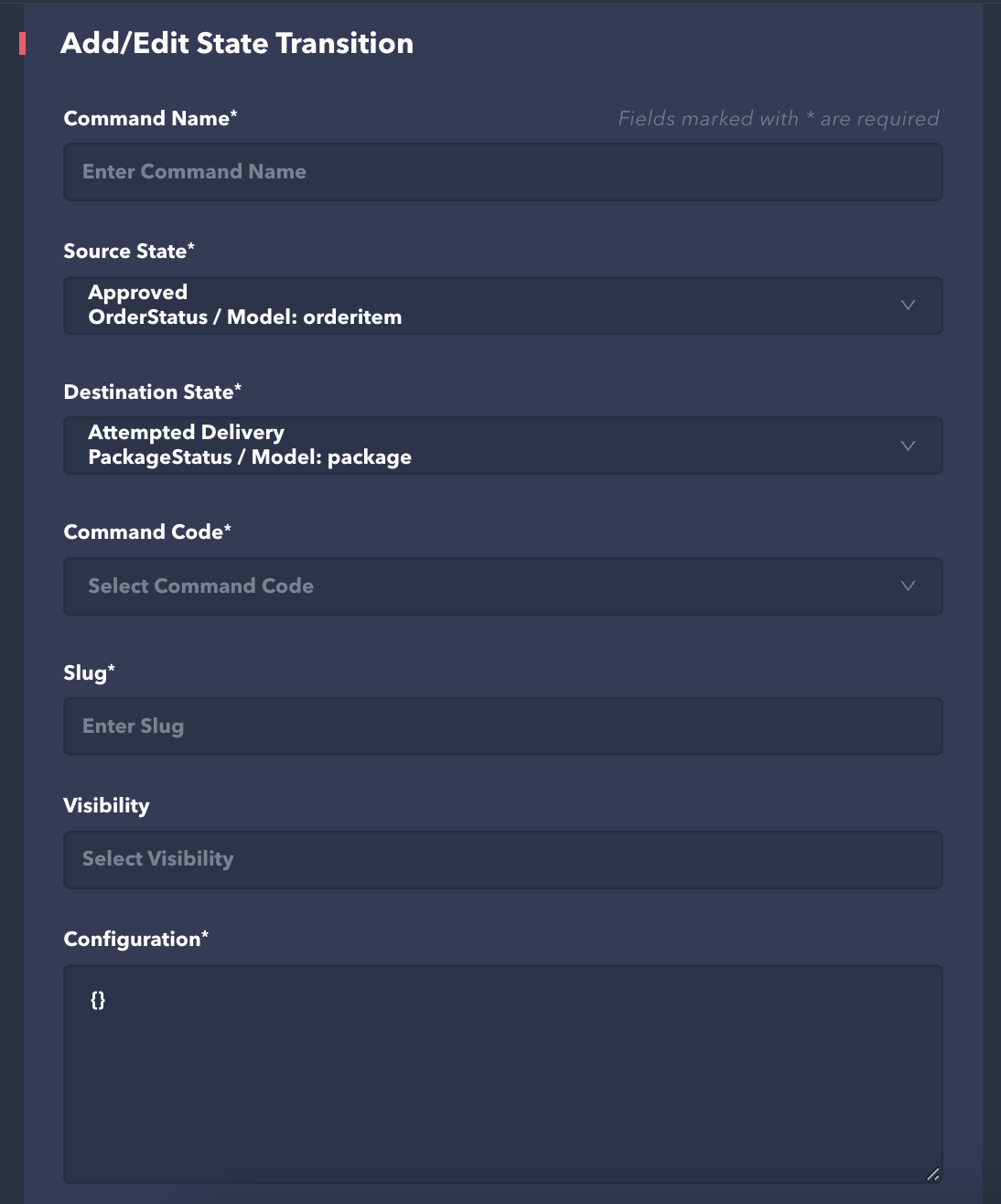
A state transition is defined by completing the form on the state transition detail page. These defined state transitions facilitate package and transfer operations. Here are the fields you need to fill:
* **Command Name**: Provide a name for the state transition. This name will be displayed on the Package/Transfer detail page.
* **Source State**: This state varies depending on the specified command. It's essential to select the appropriate source state for the command to run successfully. Otherwise, you will receive an error code. This represents the state of the package, transfer, or shipment record before the command is run. (Listed in detail for each command).
* **Destination State**: This state varies depending on the specified command. It's essential to select the appropriate target state for the command to run successfully. Otherwise, you will receive an error code. This represents the state of the object. (Listed in detail for each command).
* **Command Code**: Select from the list of executable commands. Ensure that the Source and Destination States are selected correctly to display available options in the Command Code field.
* **Slug**: Enter a unique value to distinguish this state transition from others.
* **Visibility**: Determine where the command should be visible: Third Party, OMS Web, and Instore options are available.
* **Configuration**: If specific settings are required for the defined command, add them in JSON format.
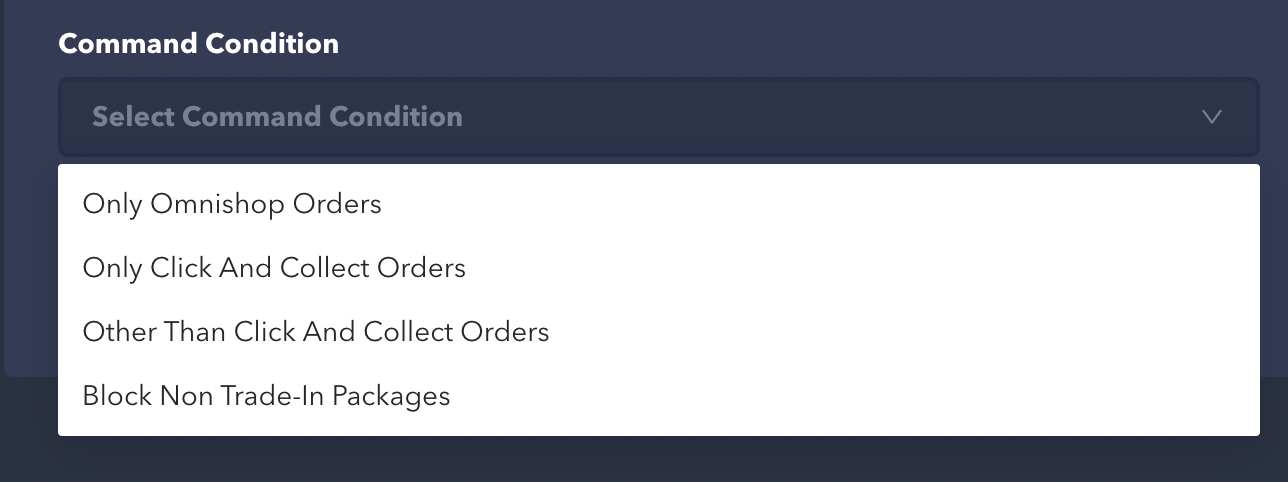
* **Command Condition**: Apply a condition for the state transition using one of four options:
## State Transition Example: `COMPLETE_PACKAGING`
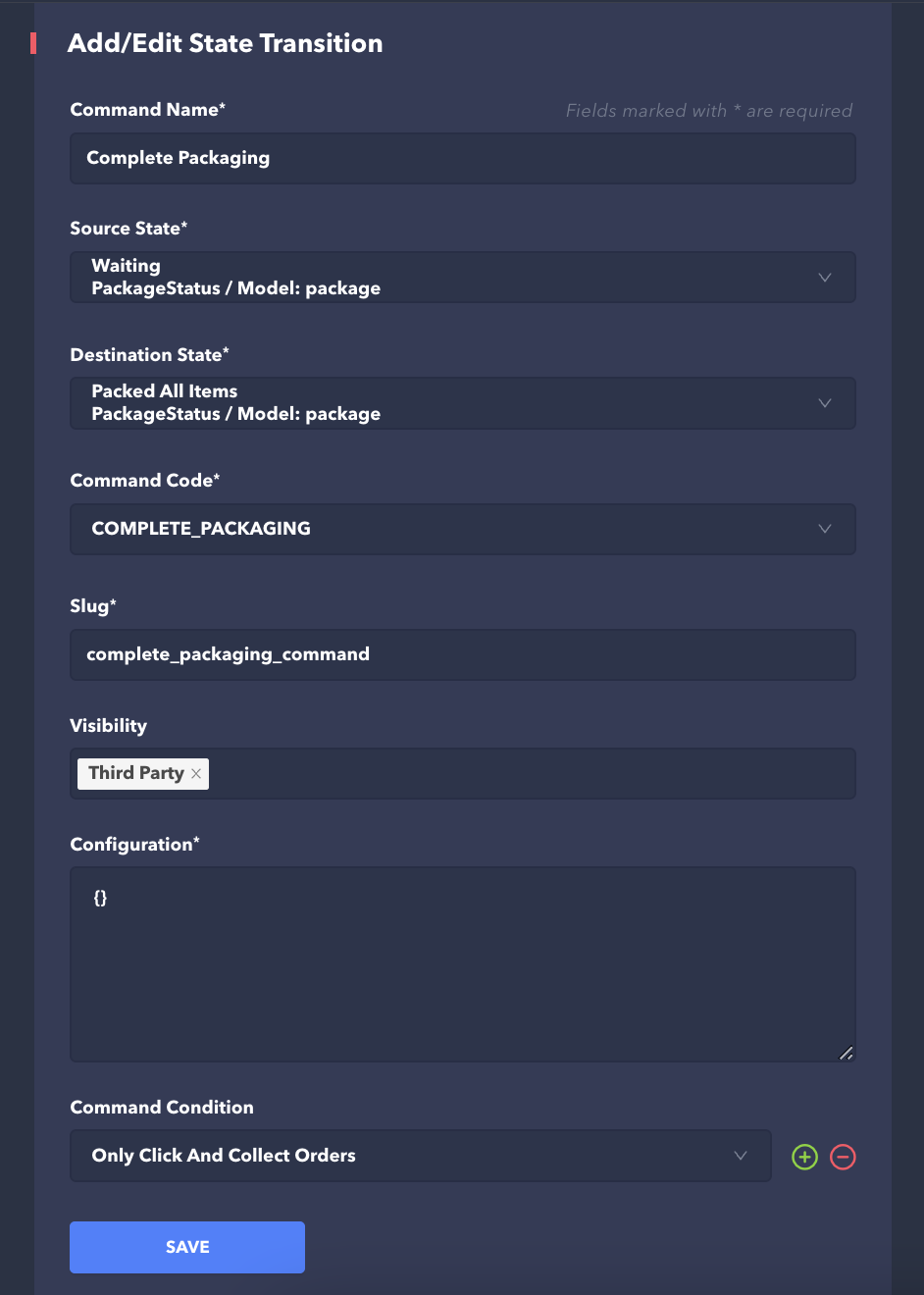
* In this example, the `COMPLETE_PACKAGING` command will be defined:
* **Source State**: Select one of the states ("Waiting," "Preparing," or "Ready for Packaging") before the packaging order is moved to the desired status. Otherwise, validation error will be triggered.
* **Destination State**: Set the target state as "Packed All Items".
* **Command Code**: Select the `COMPLETE_PACKAGING` command for completing the packaging.
* **Slug**: Add a unique value to distinguish this state transition.
* **Visibility**: Enable the Third Party option to make the command visible on that platform. However, it should remain unselected if there's no intention to make these options visible on any of the panels.
* Clicking **SAVE** will finalize the definition of the command, allowing it to update the state of a packaging order from “Waiting” to “Packed.”
---
# Agent Instructions
This documentation is published with GitBook. GitBook is the documentation platform designed so that both humans and AI agents can read, navigate, and reason over technical content effectively. Learn more at gitbook.com.
## Querying This Documentation
If you need additional information that is not directly available in this page, you can query the documentation by asking a question.
Perform an HTTP GET request on the following URL with the `ask` and `goal` query parameters:
```
GET https://docs.akinon.com/tutorials/oms/state-transitions.md?ask=&goal=
```
`ask` is the immediate question: it should be specific, self-contained, and written in natural language.
`goal` is what the user is ultimately trying to achieve, the reason they need the answer. Sharing it helps GitBook give you a better, more relevant answer. A goal is most helpful when it describes the outcome the user wants rather than restating the question. For example, with `ask=how do I create an API token`, a goal like `automate deployments from our CI pipeline` lets GitBook tailor the answer to that use case.
The response will contain a direct answer to the question and relevant excerpts and sources from the documentation.
Use this mechanism when the answer is not explicitly present in the current page, you need clarification or additional context, or you want to retrieve related documentation sections.